
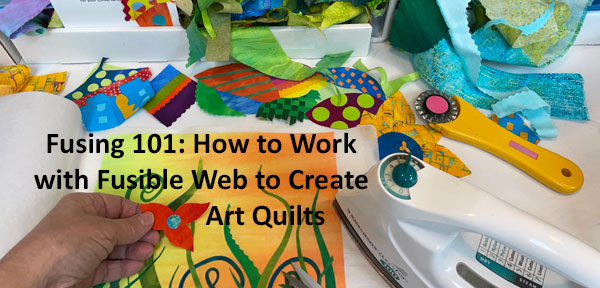
Fusible web makes small art quilts fast to assemble, but heavy fusing can leave a quilt stiff and hard to quilt by hand. These habits come from years of teaching Fusing 101 and building the Chicago School of Fusing projects.
Trace pattern pieces onto paper-backed fusible, then fuse to the wrong side of fabric with a hot, dry iron. Press from the fabric side when you can so the web melts evenly without scorching the surface.
Cut fused fabric with sharp scissors or a rotary cutter. Ragged edges mean you pressed too long or used a dull blade. Replace blades often when you cut fused stacks.
Fuse-tack, do not wall-paper
Join large background areas with narrow strips of fusible along seams only. Covering every inch of batting with web makes the quilt board-flat. Fuse-tacking keeps flexibility for hand quilting and embroidery.
Steam-set the top to batting lightly, then add embroidery or machine quilting. For binding on fused edges, see the fusing binding tutorial on the site.